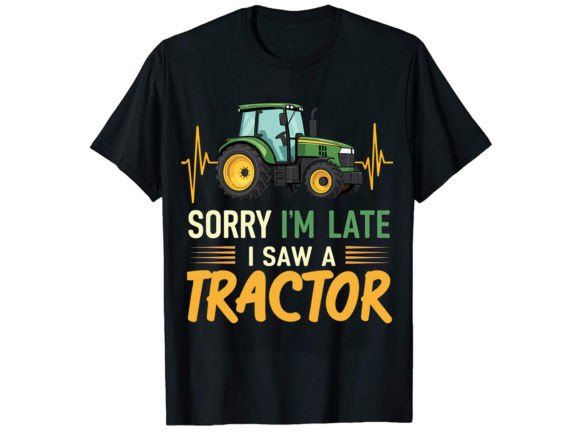
Sorry I'm Late, I Saw a Tractor Embroidery Design Review
When a new tractor-themed design lands on my screen, I always ask the same thing: will this actually stitch well, wash well, and make someone smile? The Sorry I m Late I Saw a Tractor T-Shirt graphic promises a lot of personality, but personality alone doesn’t hold up under a needle. As someone who has spent years transforming digital files into tangible embroidered goods—for Etsy listings, craft fair tables, and custom client orders—I need to know whether a design is truly machine-embroidery friendly or just a pretty piece of clip art. This review is my honest, practical breakdown before I run a test stitch on a toddler tee and a set of kitchen towels for a small shop restock.
First Impressions: Whimsy, Warmth, and a Touch of Country Humor
Open the file folder and you’re immediately greeted by a high-resolution 4500×5400 pixel PNG at 300 dpi, along with a clean product mockup. The visual mood is lighthearted without being childish, apologetic without being sappy. The phrase “Sorry I’m late—I saw a tractor” carries that universal country-life chuckle that resonates with rural families, farm kids, and anyone who has ever been delightfully distracted by machinery. The tractor illustration itself isn’t hyper-detailed; stylized lines keep it bold, slightly chunky, and well-balanced next to the hand-lettered-style text. For embroidery, that’s a relief. Overly intricate designs with tiny spokes or delicate shading often turn into thread mush on anything smaller than a jacket back. This one feels intentionally simplified, which tells me the original artist thought about how the artwork would translate beyond a screen.
Design Structure That Works With a Needle, Not Against It
The composition is centered and roughly symmetrical, which works beautifully on shirt chests, bib fronts, pocket placements, and tote bag panels. The tractor shape is rounded and continuous enough to convert into a smooth fill stitch or even a hybrid applique design if you want to save thread and reduce density on light knits. The lettering size feels generous—I’d guess no smaller than half an inch tall once resized for a standard adult tee—so you won’t lose readability at common hoop sizes like 4x4 or 5x7. Smaller letters under a quarter inch often bleed together, but this layout keeps the apology front and center without microscopic detail.
Where This Tractor Design Shines in Real Projects
I mentally test every new machine embroidery design across the products my customers actually buy. Here’s where the Sorry I m Late I Saw a Tractor T-Shirt graphic will likely perform best:
- Custom apparel for kids and adults: Cotton tees, sweatshirts, and hoodies in light to medium colors give those tractor lines crisp definition. The playful message makes it an instant hit for farm-loving dads, grandpas, and little ones alike.
- Tote bags and canvas totes: The sturdy fabric texture handles dense satin stitch outlines well, and the rectangular layout fills a tote panel without floating awkwardly.
- Kitchen towels and aprons: This is my secret weapon. A flour-sack towel with this tractor design near the hem has consistent selling power at farm markets and online small shop product listings. The humor fits exactly right in a kitchen filled with the aroma of fresh coffee and a view of the fields.
- Embroidered patches: With a tight merrow edge finish, this design becomes a sew-on or iron-on badge that tractor clubs and rural gift shops adore.
- Nursery décor and baby items: A soft onesie or baby blanket with the simplified tractor in pastel thread colors turns mechanical into cozy. Parents who grew up on a farm melt over this kind of personalized gift.
Thinking Like a Customer: How the Message Lands
The phrase isn’t just cute; it tells a tiny story. Someone opened the door, saw a tractor, and lost track of time. That’s relatable, genuine, and instantly recognizable in rural communities. When I imagine a finished product—say, a heather grey sweatshirt stitched in deep forest green and charcoal—I can already picture a parent wearing it to a school pickup with a knowing grin. Buyers who invest in handmade product aren’t just paying for thread; they’re buying a conversation starter, a badge of identity. This design delivers exactly that emotional hook without needing extra explanation.
Practical Stitch-Out Considerations Before You Hoop Up
As with any digital file sold as Graphics for T-Shirt Designs, the PNG isn’t a direct embroidery file. You’ll need to digitize it yourself or use quality auto-digitizing software, then test carefully. Here’s what I focus on before production:
Thread and Fabric Play
On dark fabric, outline the tractor shape with a light contrasting thread so the wheels and cabin don’t disappear. I prefer a matte polyester thread for durability on items that face frequent washing. The design’s bold shapes let me use a fill stitch with a running stitch underlay to minimize puckering on stretchy fabric like jersey or ribbed knits. Always apply a quality cutaway stabilizer; tear-away won’t hold crisp edges through repeated tumbles in the dryer.
Hoop Size and Placement Tweaks
Even though the 4500px canvas gives you plenty of resolution to scale down, keep a close eye on small details if you shrink below 3 inches wide. The wheels and cabin window could close up, leaving a muddy shape. I strongly recommend stitching a test on scrap fabric first—especially if you plan to sell on a cap or curved surface. The slight arc of a hat can distort horizontal lettering, so mirror the test stitch before committing to a full batch.
Mockup Testing Before Listing
The included printable mockup is a handy starting point for Etsy product photos, but an embroidered sample will always look different from a digital preview. I printed the design on paper and pinned it to a tote bag to visualize placement, then snapped a photo. That quick step saved me from misaligning the tractor off-center on a zippered pouch. For digital product sellers, combining the provided mockup with an actual stitch-out photo builds buyer trust and significantly reduces return requests.
Where You Should Use Caution
No design is universal, and this one has a few natural limitations. The relatively broad composition doesn’t fit dainty hoop size openings like 4x4 inches without scaling down to a point where text could become illegible. On very thin or textured fabric like waffle weave or terry cloth, the tractor’s flat areas might look speckled—consider an applique design approach to get clean edges. Also, the weight of dense stitch areas on lightweight baby clothes might cause the fabric to droop. I offset that with a fusible mesh backing. For caps and hats, test the design vertically first; a side placement often works better than a front-center one because the tractor’s long horizontal line can fight the cap’s seam.
Commercial Use and Your Small Business
Before you sell any finished product featuring this artwork, confirm the licensing terms that came with your purchase. The product description doesn’t list explicit commercial rights, so reach out to the seller if you plan to apply the design to garments, totes, or mugs for your craft business. Most graphic bundles in the T-Shirt Designs category allow physical product use, but clarifying upfront protects your shop and your reputation. The same applies if you intend to resell the digitized embroidery file itself—assume personal use only unless stated otherwise.
Final Take: A Charmingly Niche Design That Earns Its Keep
After reviewing the visual structure, scaling potential, and real-world embroidery behavior, I’m confident the Sorry I m Late I Saw a Tractor T-Shirt offers something genuinely useful for makers who serve rural-themed, humorous, or family-oriented niches. It’s not a complex, multi-layered masterpiece, but that’s exactly why it works. Clean lines, a warmhearted joke, and a layout that cooperates with needle and thread make this a smart addition to your design assets folder. I’ll be turning mine into a small run of linen tea towels and a few toddler raglan tees, and I fully expect it to move quickly once the farm stand pops up and the coffee starts pouring.