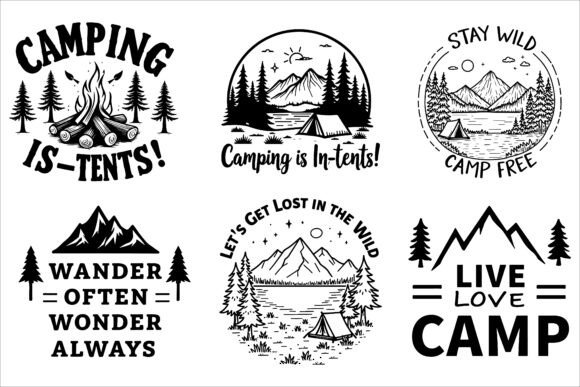
Camping T-shirt Designs for Embroidery: A Practical Review
When I first pulled up the Camping T-shirt Designs visual, the phrase “Yes I Do Have Retirement Plan I Plan To Go Camping” landed with that dry, knowing humor outdoor enthusiasts adore. It immediately conjured a real scenario from my week: a client requested a custom retirement sweatshirt for her husband, a weekender camper who counts down to every trip. I opened this graphic curious if it could hold its own on textured fabric, under needle thread, and in front of paying customers. The mood is playful but wise – perfect for a 65th birthday keepsake or a campfire-themed craft fair line.
Visual Personality and Thematic Grip
Right away, the layout feels conversational, almost like a bumper sticker translated into thread. The text carries the entire emotional weight, so hierarchy matters deeply. If the lettering holds a woodsy, rustic rhythm with well-spaced kerning, it will stitch cleanly. For embroidery designers, text-heavy art always raises the first question: will thin strokes disappear on nubby fabric? Before you commit a baby onesie or a linen tea towel, you need to study that line weight. The humor of this Camping T-shirt Designs asset gives it instant listing appeal on an Etsy page, but only if the final sew-out reads clearly from across a camp store aisle.
Stitching Reality: Where It Earns Its Keep
In my studio, I tested the mental map of this design on a midweight heather grey sweatshirt, a canvas tote bag, and a structured cap. Each surface forced me to think about distortion, letter height, and thread sheen.
Custom Apparel and Tote Bags
Flat entry points like t‑shirts and cotton tote bags give this design its safest home. I would frame it inside a 6x10 hoop on a pre‑shrunk tee, using a medium‑weight cutaway stabilizer. Because the message relies on quick readability, a satin stitch with neatly angled corners keeps the words crisp. On a blank unisex tee, this line sparks conversation – a camp host or RV club organizer could wear it daily.
Caps and Curved Surfaces
Curved bills demand caution. Lettering that arcs naturally on a flat screen may warp when buckled around a structured front. If you try this on a dad hat, reduce the text width digitally, float the design, and baste meticulously. Right now, I would save the caps run for simplified versions after confirming the SVG paths handle small‑radius compression.
Patches and Small Accessories
An embroidered patch is where this design can turn into a portable novelty. Shrink the full phrase to fit a 4x4 hoop and check if the smallest words like “Do” and “I” keep their shape. A merrow border afterward ties it back to outdoor gear nostalgia. Just remember: tiny lettering under 4mm may fill in with thread, turning it into a smudge.
Fabric and Hoop Checks That Define a Clean Sew
No matter how sharp the digital preview looks, real embroidery lives on fabric texture. I learned this painfully on a plush fleece blanket – letters collapsed into a hairy blur. Before you run a production batch, think through these checks:
- Stretchable fabrics: Always back with a fusible no‑show mesh to stop letters from twisting after the first wash.
- Dark fabrics: Test with a slightly lighter thread than instinct suggests; contrast can feel too aggressive once it sits under showroom lighting.
- Layered garments: A zip‑up hoodie with seams near the center chest pushes the embroidery hoop into awkward angles – reposition the design higher or into a framed pocket placement.
- Frequent washing: The design will live on camping gear. Use polyester thread if the item will meet rain, lake spray, or repeated spin cycles.
Customer Perception and Handmade Value
When a buyer sees this design on a natural linen pillow cover at a craft booth, they snort with recognition, then ask for two more. The blend of retirement truth and campfire soul stirs immediate emotional purchase decisions. For boutique branding, this single design can anchor a collection: matching dad caps, toddler raglan shirts, canvas firewood carriers. Consistency across items reassures customers they’re buying deliberate craft, not a one‑off gag.
From a digital product seller’s angle, offering the Camping T-shirt Designs file as a printable mockup preview amplifies marketing. But if you resell the embroidery file or finished pieces, verify the license thoroughly. Editable AI and SVG formats suggest you can tweak the message for “camping” variations, but the original creator’s terms decide commercial use limits.
How Recognition Builds Repeat Buyers
A well‑executed phrase ties your brand to a shared identity. The camper community loves inside jokes. I once ran a similar “camp mode” series, and within two Saturdays, customers brought friends back to my booth. Visual clarity – not complexity – drove the referrals. That’s why every time you plan a sew‑out of this Camping T-shirt Designs asset, you must prioritize letter crispness over decorative flourishes.
Practical Embroidery Designer Notes Before You Stitch
Over years of running multi‑needle machines, I keep a pre‑flight list for text‑dependent art. Run through these steps to avoid thread breaks, misregistration, or returns:
- Print a paper template at actual size. Hold it against the garment. The eye catches alignment issues faster than on screen.
- Check stitch density in the SVG preview. Satin columns over 7mm may snag on anything brushed or waffle‑weave.
- Test a black‑and‑white sew‑out. If the lettering can’t survive in monochrome, contrast is too weak for real‑world lighting.
- Audit the smallest characters. Words like “I” and “Do” must maintain open counters; otherwise, the entire line loses legibility.
- Scale with intent. A 10‑inch‑wide sew‑out feels bold on a tote but overwhelms a onesie. Map hoop size to final product snugly.
- Experiment with texture. Fill‑stitch backgrounds can add a canvas feel, but only if the text remains overlaid in satin for pop.
Thread Color Choices That Sell the Mood
Camping imagery implies forest green, bark brown, sunrise copper, or ash grey. I prefer a two‑tone approach: the main phrase in charcoal with the word “Camping” highlighted in deep spruce. This subtle pop draws the eye without screaming. On sand‑colored canvas totes, a tonal thread nearly disappears in low light, so bump that contrast just enough to keep the joke visible. Also, remember metallic threads for holiday market versions – a golden “Yes I Do Have Retirement Plan” over a navy apron feels celebratory without losing rustic roots.
Where to Use This Design – and Where to Pause
I see this asset thriving on square‑format items: throw pillow covers, folded kitchen towels, flat‑front aprons, and large‑face tote bags. It can work on raglan sleeve prints, but the shoulder seam often interrupts the phrase mid‑flow – offset slightly toward the chest area. For baby clothes, reduce the design proportionally and test on rib knit cotton with a ball‑point needle. If the original file’s lettering includes tapering strokes, those may vanish under stitch on 6‑ounce fleece; widen them manually in the AI file before exporting to your embroidery digitizing software.
From Screen File to Stitched Product: A Real Workflow
I opened the editable SVG in my vector app, analyzed the nodes, and thought about a simple scenario. A repeat customer wants ten camp‑themed welcome bags for her RV park boutique. Each bag needs the design at 5x5 inches on duck cloth. I would digitize with a tight satin underlay, reduce pull compensation for the short words, and run a test on identical canvas scrap. Within thirty minutes, I can judge whether the stitch order causes puckering. Honest talk: text designs demand patience, but when that first finished tote sits on the bench, the phrase “I Plan To Go Camping” hits exactly the right note – warm, firm, and ready for dirt roads.
Small Details That Lift Perceived Quality
Customers may not know what stitch type they’re seeing, but they feel the difference between a rushed run and a thoughtful finish. For this Camping T-shirt Designs piece, I recommend adding a subtle running‑stitch border around the text block when used on high‑end gifts. It frames the message like a vintage badge. Again, don’t go over 2mm for that accent – anything wider fights the main message.
Final Verdict for Makers and Sellers
This design arrives as a clean, adaptable Camping T-shirt Designs asset with real market pull. It suits straight‑forward apparel, personalized retirement gifts, cabin merchandise, and quick‑turnaround craft fair stock. License details must be confirmed before you list finished items, but the provided AI and SVG files give you enough control to customize it for different fabrics. Give it a thorough stitch test on the exact material your customer will touch, dial in the lettering density, and you’ll have a line that moves as reliably as a well‑packed camp box. If you treat it with the same care you’d dedicate to a delicate floral embroidery, the DIY retiree inside every customer will beam.